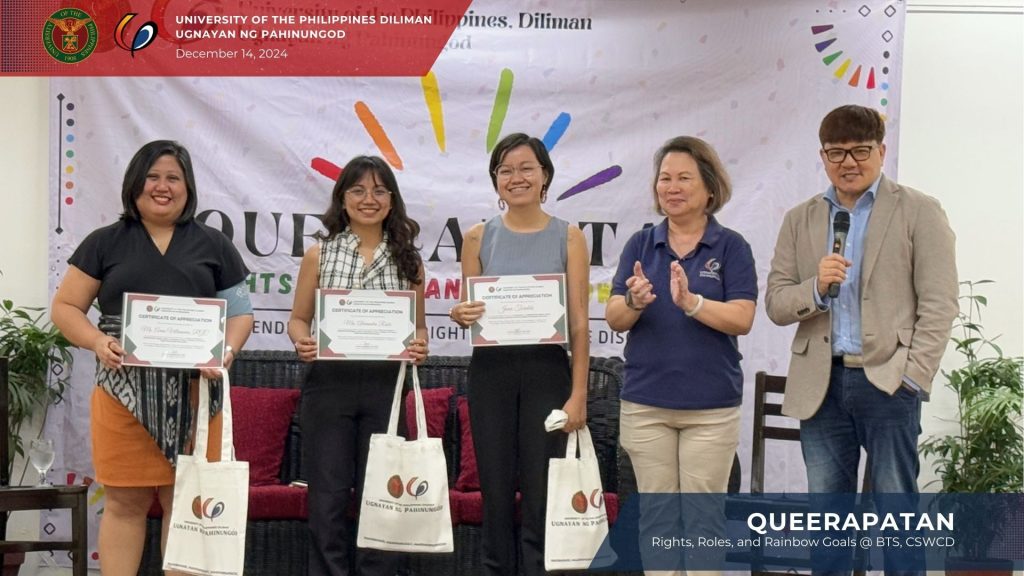
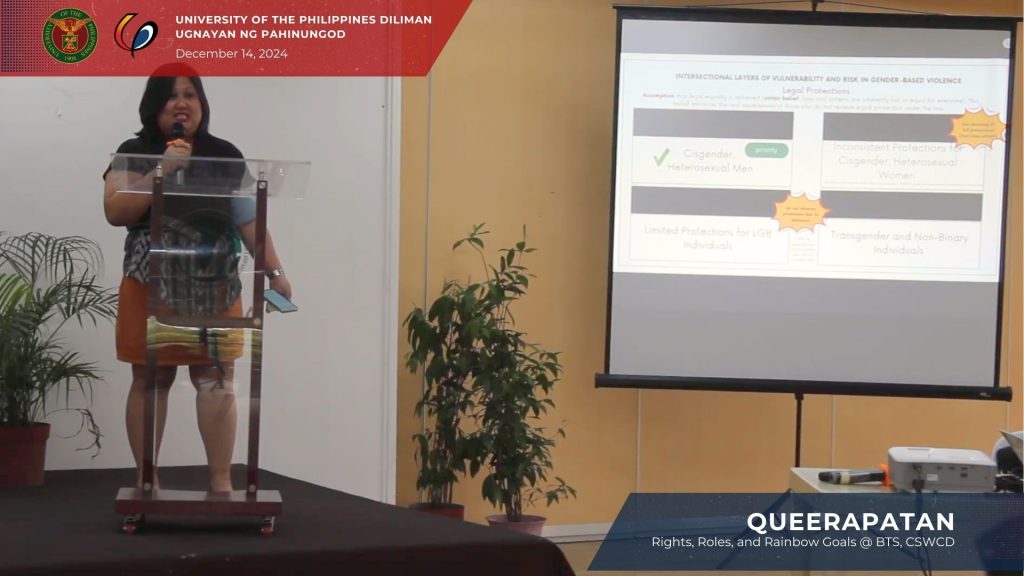
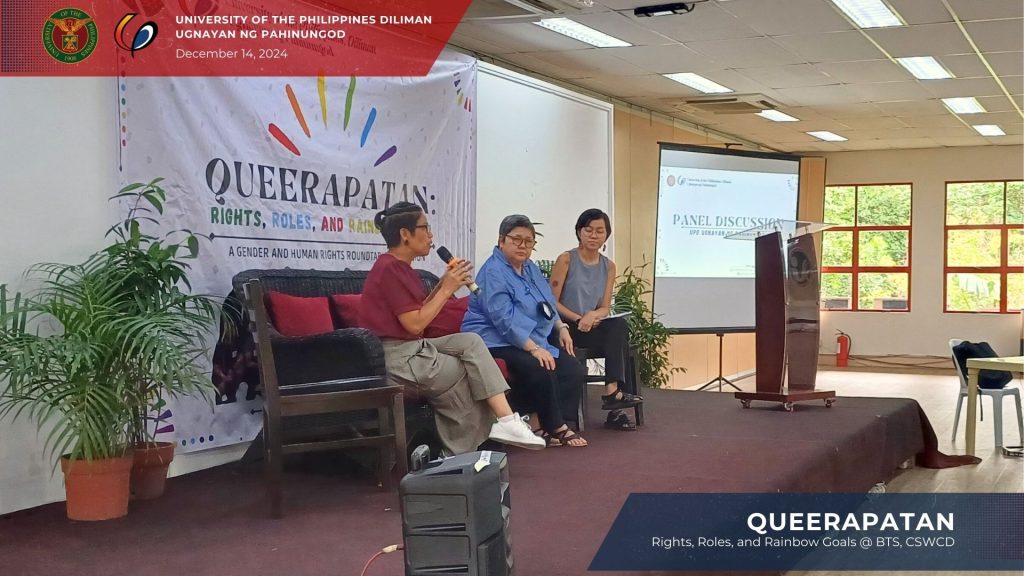
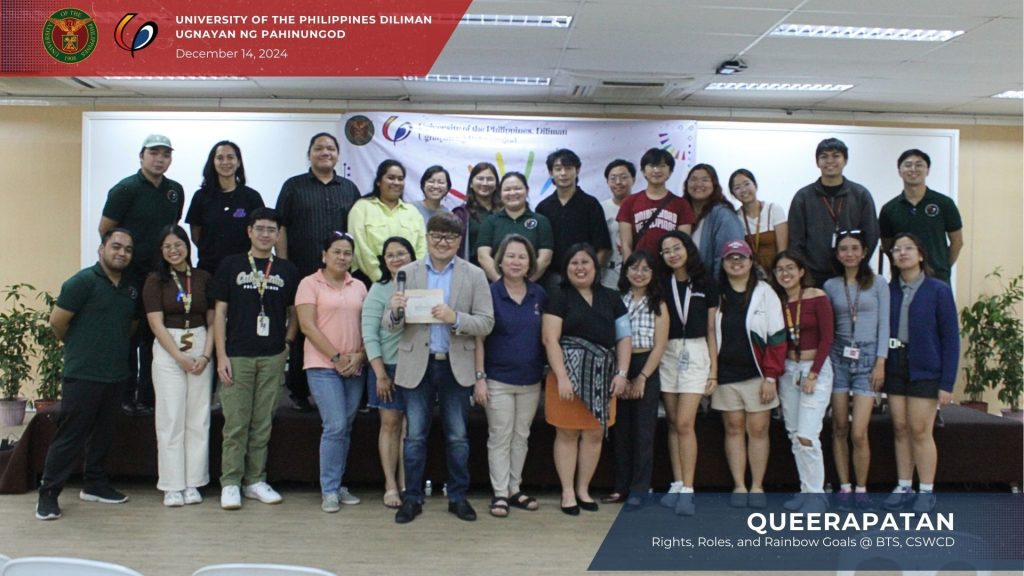
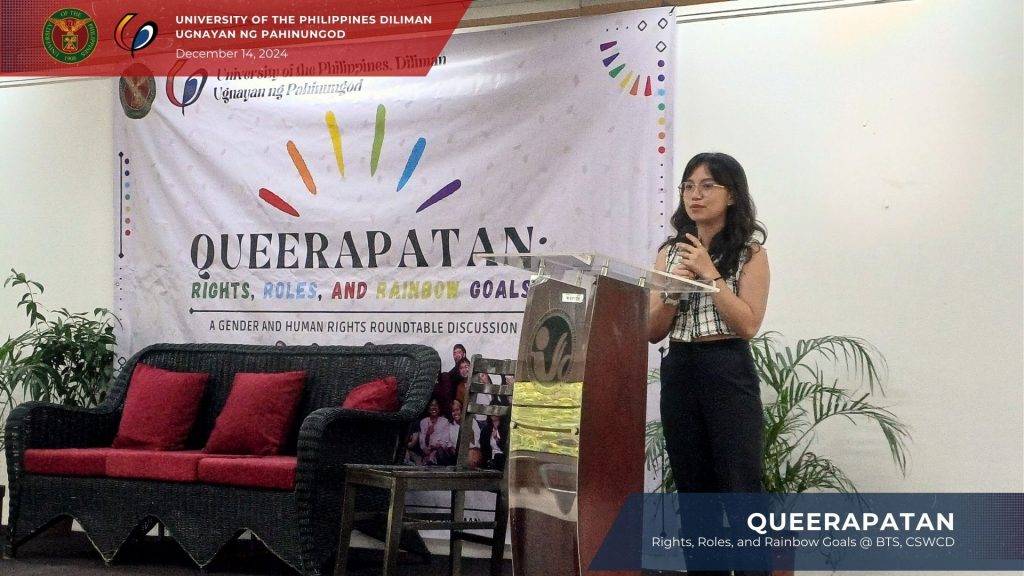
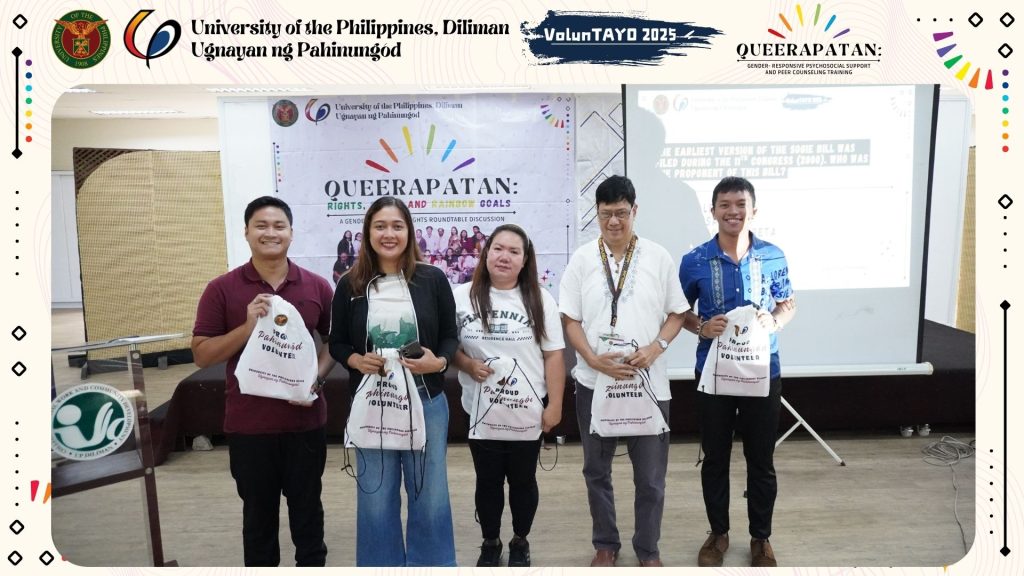
The Gender and Human Rights Roundtable Discussion is an initiative by Ugnayan ng Pahinungod UP Diliman to engage Pahinungod volunteers and other participants in a thorough exploration of pressing gender and LGBTQ+ issues. Recognizing the crucial connection between gender and human rights, this session, facilitated by a panel of experts, will address essential topics including gender-based violence, LGBTQ+ rights, and intersectionality. Volunteers will gain in-depth insights and practical knowledge from the discussion.
During the roundtable, volunteers will observe the expert discussions and have the opportunity to ask questions, enabling them to enhance their understanding and develop effective strategies for addressing gender-related challenges in their service work. The goal is to equip volunteers with a deeper awareness and actionable approaches for advocating gender and human rights within their communities.
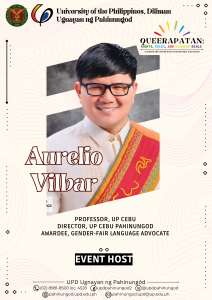
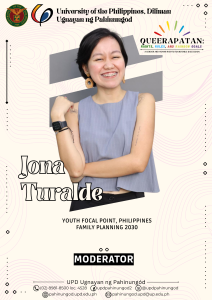
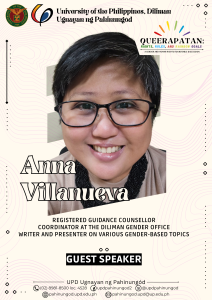
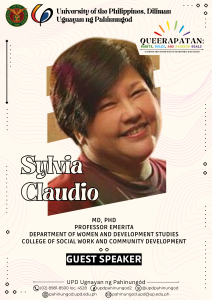
Guests
The Activity
This roundtable will feature a panel of experts who will delve into topics such as gender-based violence, LGBTQ+ rights, and intersectionality. The discussion will revolve around the following topics:
Gender-based Violence (Women & LGBTQ+ Focus)
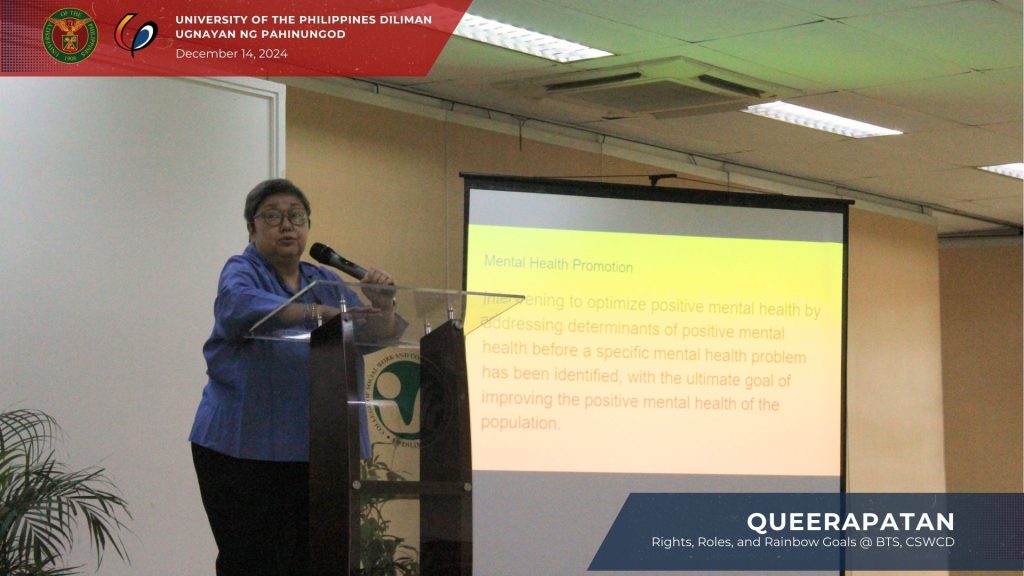
Mental Health and Well-being (Women & LGBTQ+ Focus)
Gender and Human Rights
LGBTQ+ Representation in Media and Society
Program Objectives
Empower Pahinungod volunteers and other participants to reflect on gender and LGBTQ+ issues
Provide a platform for participants to share their insights and experiences regarding gender-related challenges.
Increase the volunteers’ capacity and knowledge of the intersectionality of issues relating to gender and human rights
Recorded Session
Gallery
QUEERAPATAN Part 2
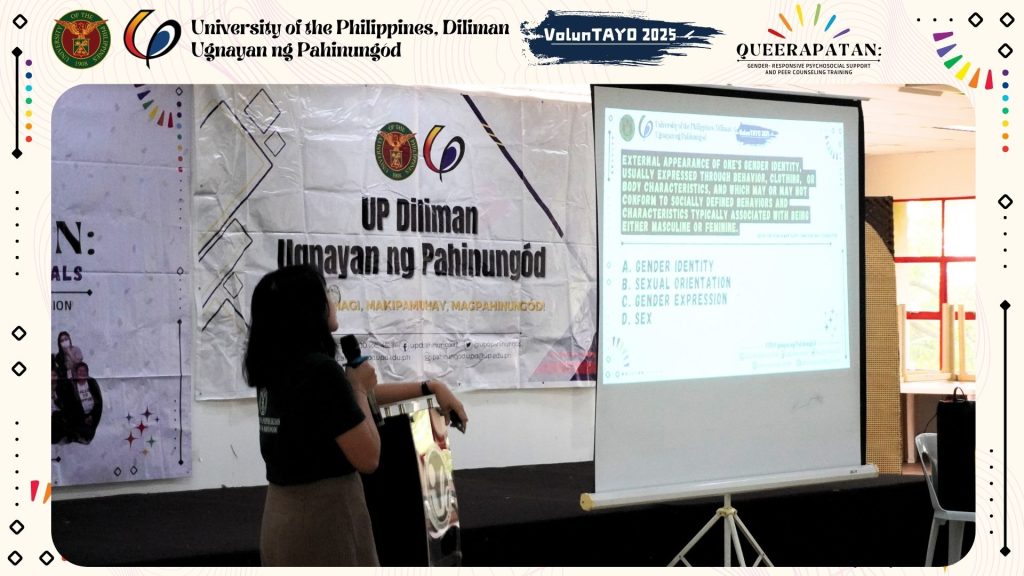
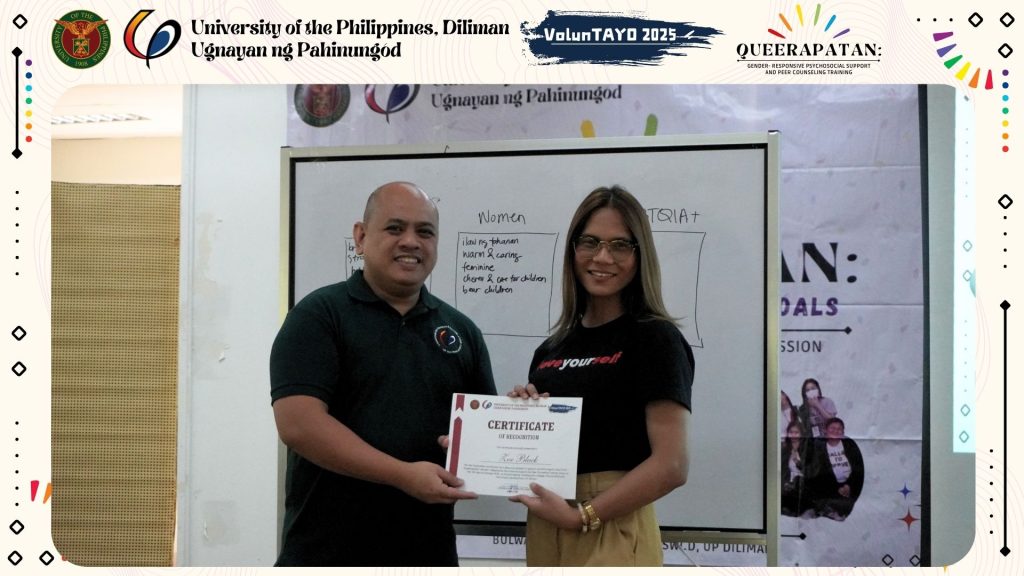
Gender-Responsive Psychosocial Support and Peer Counseling Training
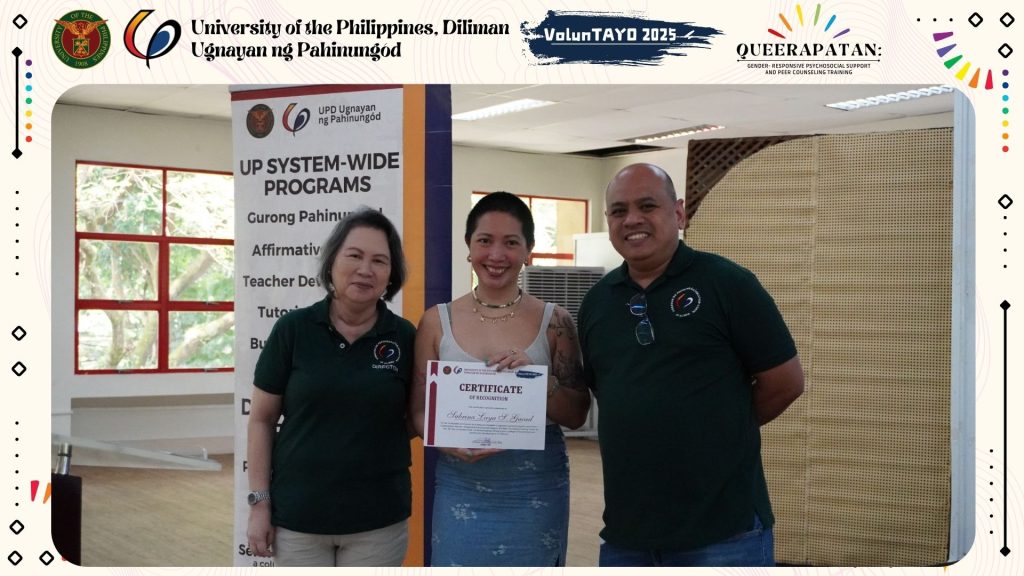
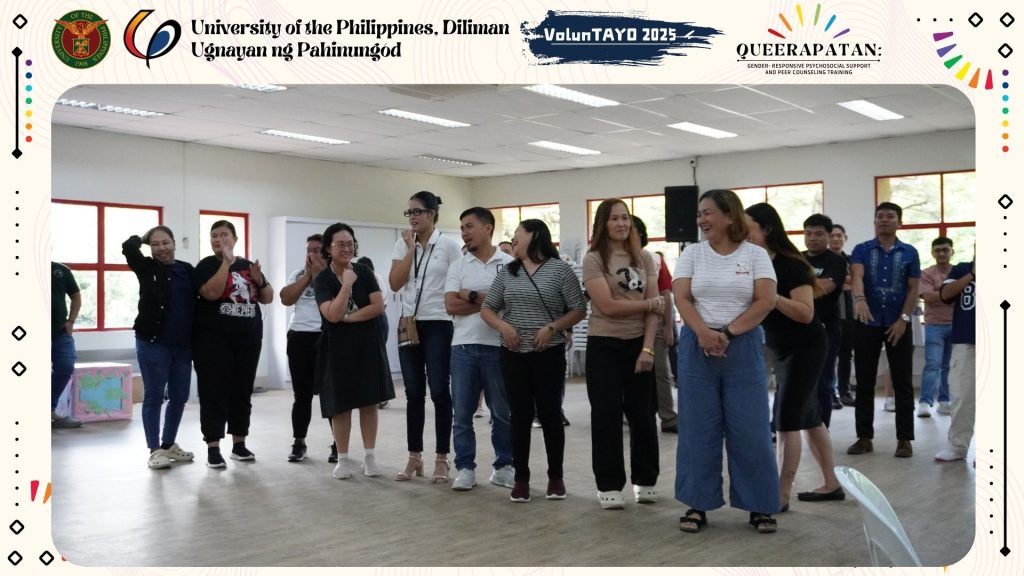
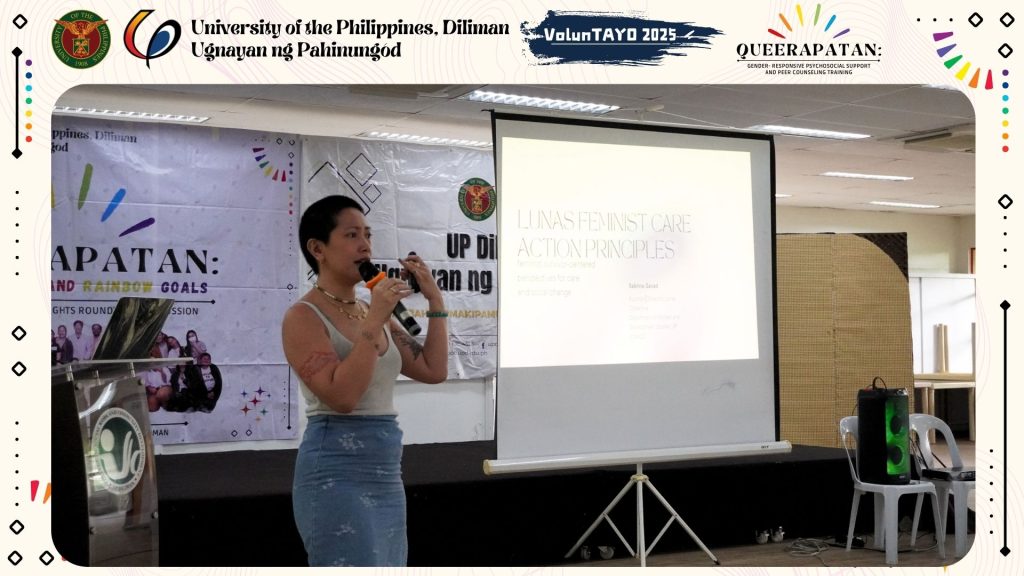
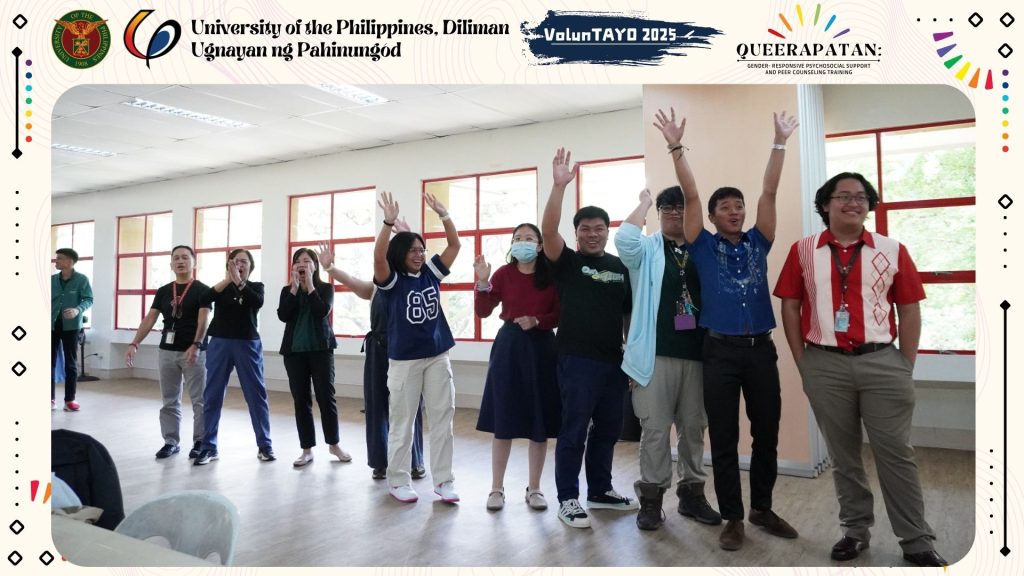
On October 6, as part of the VolunTAYO 2025 event, we proudly conducted the second installment of our Queerapatan series — a Gender-Responsive Psychosocial Support and Peer Counseling Training. The session served as a meaningful space for learning, empathy, and allyship, empowering participants to better understand the unique psychosocial needs of the LGBTQ+ community.